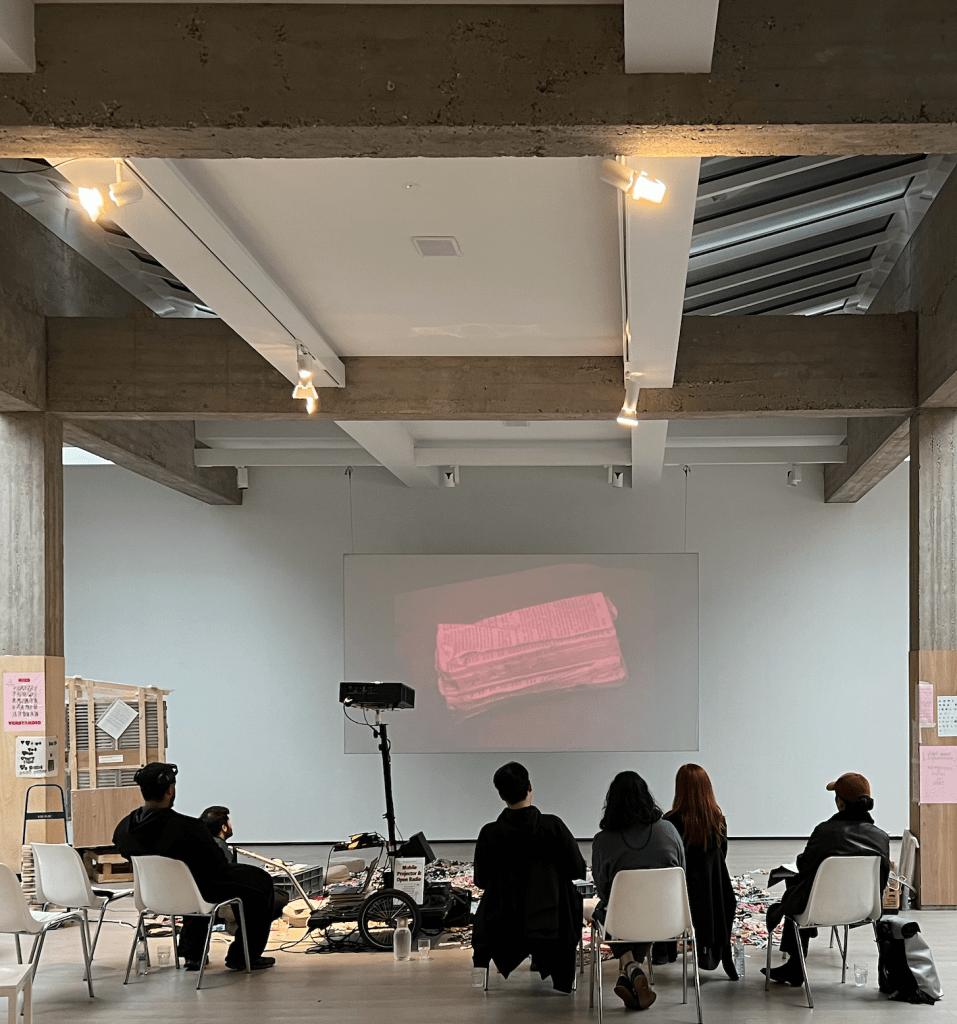
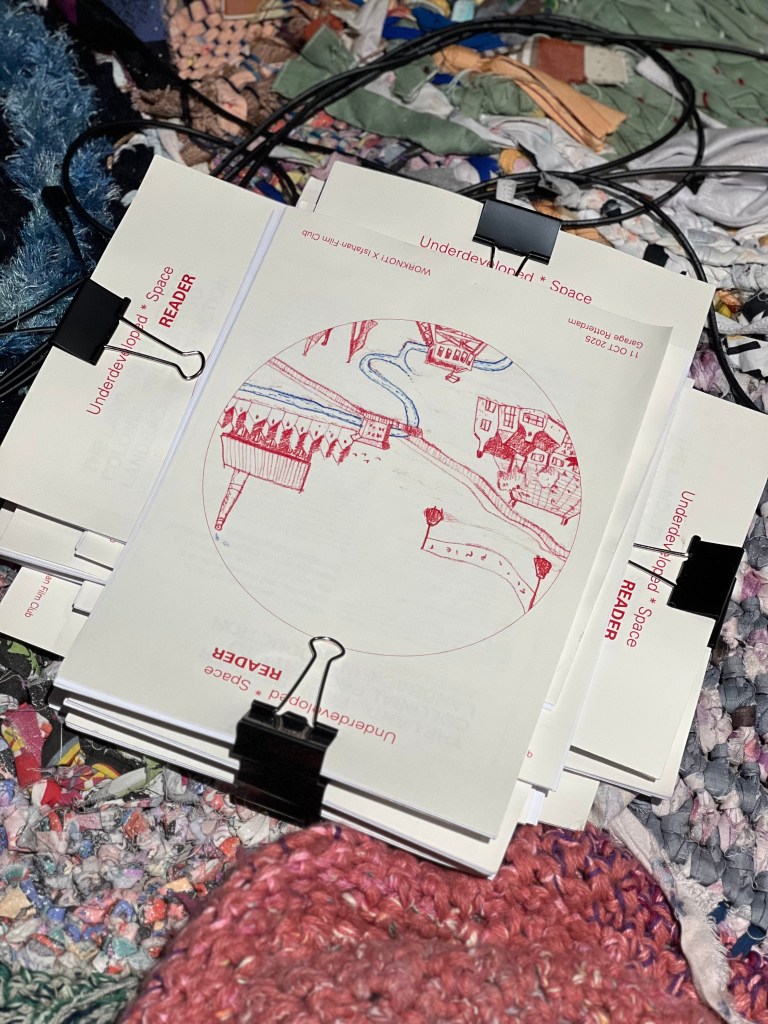
Together with Isfahan Film Club we organized intimate gatherings at Garage Rotterdam, within the exhibition Underdeveloped #4.
The first event focused on the thematic topic of housing and domestic life in their intersections with precarity and displacement. In our extractive and capitalist reality, individual and collective bodies are violated under financial, environmental, and (geo)political regimes of oppression and eviction.
The afternoon started with an introduction by WORKNOT! followed by a screening of various films excerpts leading to an open discussion over the dinner prepared by the collective. The screening is an exercise in assembling a narrative based on audiovisual documentation of the topic in a variety of contexts, urgencies, and forms of precarity. WORKNOT! in collaboration with Isfahan Film Club prepare this screening to facilitate the collective discussion.
*
The Underdeveloped exhibition series showcases alternative ways of organizing within the art world, focusing on interconnected practices where projects contribute in their own unique way and through their own imagination. In the third Underdeveloped edition at Garage Rotterdam, the exhibition space is seen as part of an existing and growing cultural network in Rotterdam—a network of individuals, places, groups, momentum, and energy. Within the exhibition, everyone can use a printing workshop, the familiar Underdeveloped kitchen, a shop, library, video room, materials, and an educational corner. Underdeveloped #4 isn’t about “end products” or individual contributions. That’s why all the artists are referred to as a collective. “Networking isn’t a diagram, but a rhythm that’s lived.”
*
Isfahan Film Club began its activities in the spring of 2022, with a focus on showcasing and producing experimental films. The collective grew in response to the challenges faced by filmmakers in Iran. Isfahan Film Club emerged to connect low-budget experimental filmmaking practices to the broader social and political realities of local communities. They address the absence of accessible educational structures by drawing on the shared resources and collaborative efforts of its members.

 WORKNOT!